
 4.8 / 5
Best of Corfu, Dubrovnik, Katakolon and Mykonos Four Port Package

 4 Port Package
 4.7 / 5 | 530 Reviews
 Standard
Moderate
Cruise Ship Pier
Standard
Moderate
Cruise Ship PierWhere most cruise lines may offer only two of the three must-see sights on Corfu, this tour affords you three wonderful destinations, and in groups never larger than 30 guests per guide. Enjoy an exclusive excursion to the beautiful Achilleion Palace and Gardens, the monastery of Paleokastritsa, and the UNESCO World Heritage site of Corfu Town.
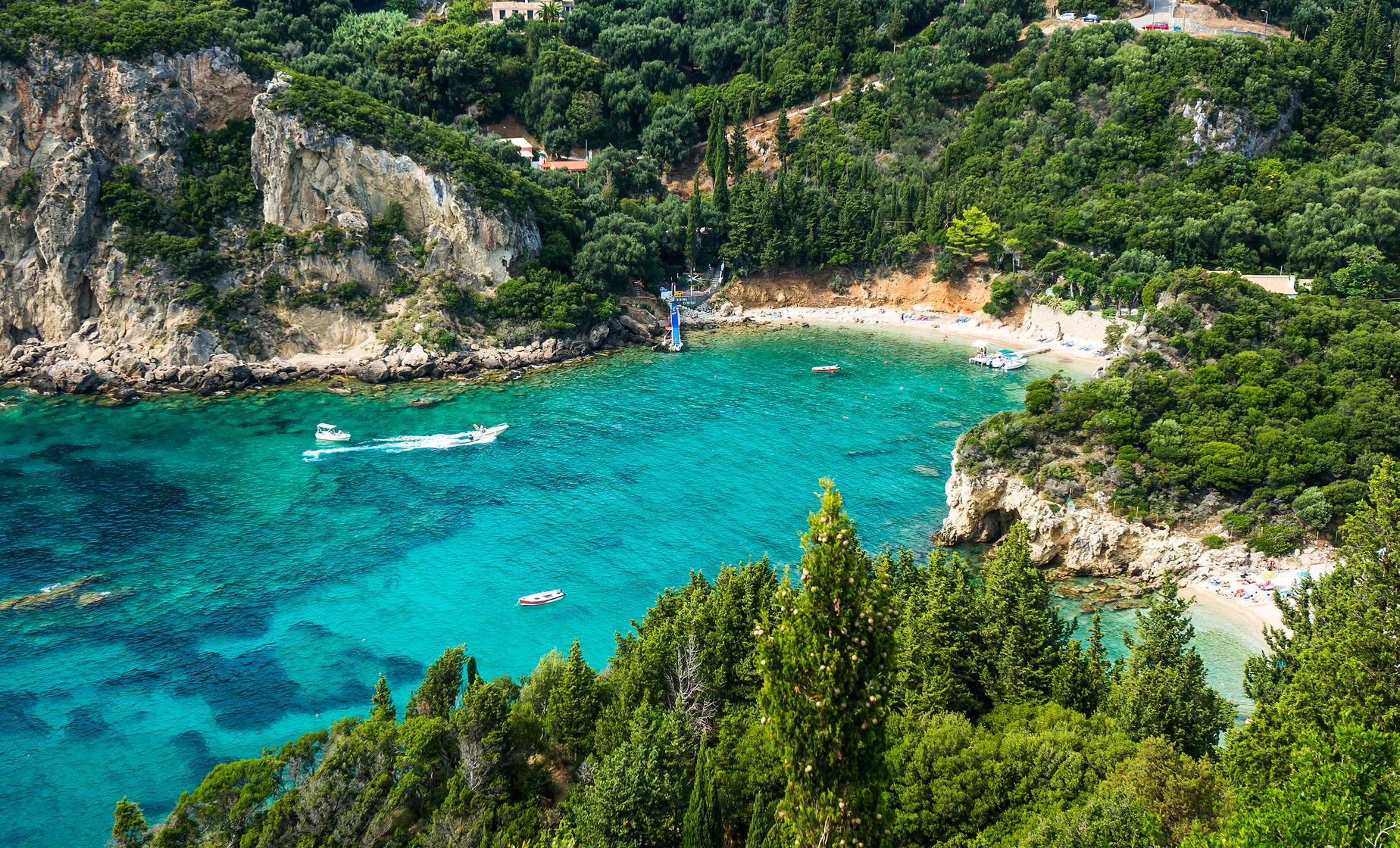
After meeting your professional, local and friendly guide on the pier, depart Corfu town and drive through the beautiful countryside for approximately 30 minutes to the famous Monastery of the Virgin. The monastery is located high on a hill overlooking the gorgeous Paleokastritsa Bay, known as the "Capri" of Greece. This Byzantine monastery is still inhabited by a self-reliant community of monks; its long history is evident from the collections of Byzantine icons and other religious relics featured in the chapel and its museum.
Following your guided tour of the monastery, approximately 90 minutes, continue from here with a drive over the mountain ridge passing through some of the most picturesque traditional villages on the northern side of the island with views of the countryside, island life and glimpses of the coast in the distance.
Approximately 30 minutes later you will reach the old traditional village of Gastouri where you will visit the Achilleion Palace, built by Empress Elisabeth "Sissy" of Austria in 1891, and later owned by Kaiser Wilhelm II of Germany. In addition to visiting the interior rooms that are open to the public, you will also see some of the beautiful gardens full of exotic trees and flowers, which the Empress brought with her from her trips around the world. The gardens also feature several classical statues, as she was very fond of Greek ancient history and mythology. The main Terrace of the Muses is decorated with statues of the Nine Greek Muses and the imposing figures of Achilles Victorious and Achilles Dying. From several places in the garden you will also have spectacular views over the Ionian Sea.
Leaving Achilleion, you will make your way back to Corfu, approximately 40 minutes away. Once in the Old Quarter of Corfu Town, drive to the front of the Old Venetian Fortress (14th-century UNESCO World Heritage site), opposite the central Esplanade Square. From here, your guide will lead you on a beautiful walking tour of the historic center of the Old Town. Walking through the maze of winding narrow cobbled streets known as kandounia, you will visit some of the most elegant quarters of this Venetian-built town, which competes with Napoli, Florence and Venice in terms of beauty, style, character and charm.
Walking along the old cricket grounds, a tradition left over by the British, you can see the Royal Palace of St. George and St. Michael, an imposing building built entirely of yellow Maltese stone by the first British Commissioner of the island. You will also see the spectacular arcades of the Liston Piazza, a down-sized replica of the Rue de Rivoli of Paris, built by the French in the 19th century. You will then walk to the heart of the Old Town, where you will visit the 300-year-old Church of Saint Spiridon, with its priceless collection of icons and gifts offered to the Patron Saint of the Island.
You will also have time to explore the old flea market, passing by the old Town Hall and then find yourself in the busy shopping district where you will have some free time for shopping or leisure. At the appointed time and place, you will meet your driver for the return transfer back to your ship.
Please Note: The Achellion Palace is closed until further notice and will be substituted with a visit to Mon Repos Palace. Mon Repos Palace was built in 1826 by the British Commissioner Frederic Adams as a gift to his Corfiot wife, Nina Palatianou. It is a small but very beautiful palace with colonial architectural elements.
Standard
Moderate
An approximately 10 minute walk from the cruise ship tender pier, or an approximately 10 minute taxi (not included, approximately 10 EUR each way.)After meeting your professionally trained guide at the entrance to Dubrovnik's Old Town, you will begin your walking tour of this fascinating historical and cultural site.
The Old City, also known as the Pearl of the Adriatic, was an important Mediterranean Sea power from the 13th century onwards. Dubrovnik is a remarkably well-preserved example of a late-Medieval walled city with its Gothic, Renaissance, and Baroque churches, monasteries, palaces, and fountains.
Your tour of the Old City begins at Pile Gate, the gated entrance to this ancient city. Cross the wooden drawbridge that was once pulled up each night in order to protect the city. Upon entrance into the walled city, see Onofrio's Fountain. During the Middle Ages, this fountain provided fresh water from the Dubrovnik River through an aqueduct system. Next on your walking tour of Old Town, see the imposing Baroque architectural features of The Franciscan Monastery. This monastery also features a garden, museum, and the famous Old Pharmacy. Still in operation after 700 years, The Old Pharmacy is one of the oldest working pharmacies in Europe, and visitors can peruse the jars, ointments, and poisons that date back to the 15th century.
Your walking tour of Dubrovnik's Old Town continues with a walk up and down both sides of the famous main street, the Stradun. A walk along the Stradun will show you a few of Dubrovnik's Renaissance buildings that survived the earthquake of 1667, and will give you an idea of the city's architectural heritage. Perhaps the finest Renaissance highlight is the Sponza Palace, which dates from the 16th century and is now home to the National Archives. The Rector's Palace is a Gothic-Renaissance structure from the 15th century when it was the seat of the Government and Rector of the Republic. It has finely-carved capitals and ornate decoration, which gives us a glimpse into how the ruling class lived. The St. Saviour Church is another glorious remnant of the Renaissance period.
After your guided tour, you may choose to continue sightseeing on your own on Stradun before making your way back to the ship. Stroll the quaint streets, shop in the many boutiques, enjoy refreshments at a local cafe, or simply sit on a bench and enjoy the sights before heading back to your ship.
Please Note: This tour concludes on the main street, Stradun. Guests must make their way back to the ship on their own.
Standard
Moderate
Cruise Ship PierBegin your approximately 40 minute journey to the birthplace of the Olympic Games with a drive through scenic villages. The Olympic Games, during classical times, were the most famous games in the known world at that time. They were held every four years from the 8th century BC to the 4th century AD.
Before the site of Olympia was built, a hidden Sanctuary of Zeus sat on this spot. The sanctuary was known as an Altis. It is here where you begin your approximately 90 minute Ancient Olympia Tour.
Perhaps the most impressive ruin is the Temple of Zeus, which still reveals some of its elegance and scale. It once housed an oversized gold-ivory statue of Zeus, one of the seven wonders of the ancient world. The sculptor Phidias who made the statue had his workshop in Olympia. A Byzantine church was erected on top of the workshop and its remnants can be seen today.
The Altis also encompasses the Prytaneion, magistrates' residence, the Philippeion, an offering of Philip of Macedonia after his victory at Chaeronia and Hera's temple which served as a perfect setting for the famous statue of Praxiteles' Hermes perfectly preserved and now housed in the nearby museum.
Around the Altis, you will see the twelve Treasuries, small buildings erected as offerings by the city-states of Greece.
Just beyond the treasuries is the world famous Stadium, accessible through a vaulted entrance. It was the largest of its kind seating 20,000 people during the ancient games. More recently, it was used as the stadium for the hammer throwing event in the 2004 Olympics.
Continue on to the Gymnasium, the Bouleuterion and the Leonidaion which served as a kind of hostel for the visitors of the games.
After visiting the Site of Ancient Olympia, you will have the chance to reach the beautiful village of Olympia. You will have approximately 50 minutes to stroll around the village and admire the nature of this place.
From here, you will drive back through the Peloponnese countryside to reach the port of Katakolon.
Standard
Moderate
Cruise Ship Pier or Cruise Ship Tender PierAfter meeting your guide at the pier, you will join your transportation for a drive to see some of the island. A brief photo stop will be made at northern beach, which is located on one of the largest bays of the island. It can get rather windy, attracting windsurfers and daredevils. Further along is Agia Anna beach which is sheltered from the wind creating a relaxing sandy beach. Enjoy a non-alcoholic beverage and local Greek pastry in a local coffee shop and some free time to explore before making your way towards the yet unspoilt village of Ano Mera.
This is one of the very few places in Mykonos where traditional Greek village life continues regardless of all the night life, jet setting of the island's capital. Ano Mera is the most populated village on the island and its peaceful environment and great location offer easy access to sandy beaches such as Elia, Kalo Livadi, and Kalafatis. The main square of the village is adorned with local coffee shops Kafeneio and traditional tavernas.
The village's claim to fame is the Monastery of Panagia Tourliani which houses a collection of Cretan icons and a magnificent handmade "Templo" which dates back to 1767 and came from Florence. After your visit to the Monastery, you will return to the main town of the island.
After leaving your transportation, you begin a walking tour of the twisting pedestrian streets of Mykonos Town, which is also known as Chora locally. Your guide will point out the Old Harbor area and fish market where you may see its most famous celebrity, Petros, the official mascot of Mykonos for over 50 years.
In the Kastros area, You will see the Church of Panagia Paraportiani, one of the most photographed structures on Mykonos. The church was begun in 1425 and not finished until almost 300 years later. Today it consists of five small churches connected together.
Continuing your walking tour, you will also pass through the area known as Little Venice, whitewashed buildings with multicolored shutters constructed right on the sea's edge with their balconies overhanging the water. On a hill overlooking the town, you will see perhaps the island's most famous landmark, the Mykonos Windmills which date back to the Venetians in the 16th century. From here, you will return to your transportation back to the cruise pier. If your ship is at anchor and is tendering into the old harbor area, your guide will lead you back to the tender pier.
Please provide the first and last name of each guest taking the tour.