
 4.8 / 5
Best of Dubrovnik, Istanbul and Kusadasi Three Port Package

 3 Port Package
 4.8 / 5 | 483 Reviews
 Standard
Moderate
An approximately 10 minute walk from the cruise ship tender pier, or an approximately 10 minute taxi (not included, approximately 10 EUR each way.)
Standard
Moderate
An approximately 10 minute walk from the cruise ship tender pier, or an approximately 10 minute taxi (not included, approximately 10 EUR each way.)After meeting your professionally trained guide at the entrance to Dubrovnik's Old Town, you will begin your walking tour of this fascinating historical and cultural site.
The Old City, also known as the Pearl of the Adriatic, was an important Mediterranean Sea power from the 13th century onwards. Dubrovnik is a remarkably well-preserved example of a late-Medieval walled city with its Gothic, Renaissance, and Baroque churches, monasteries, palaces, and fountains.
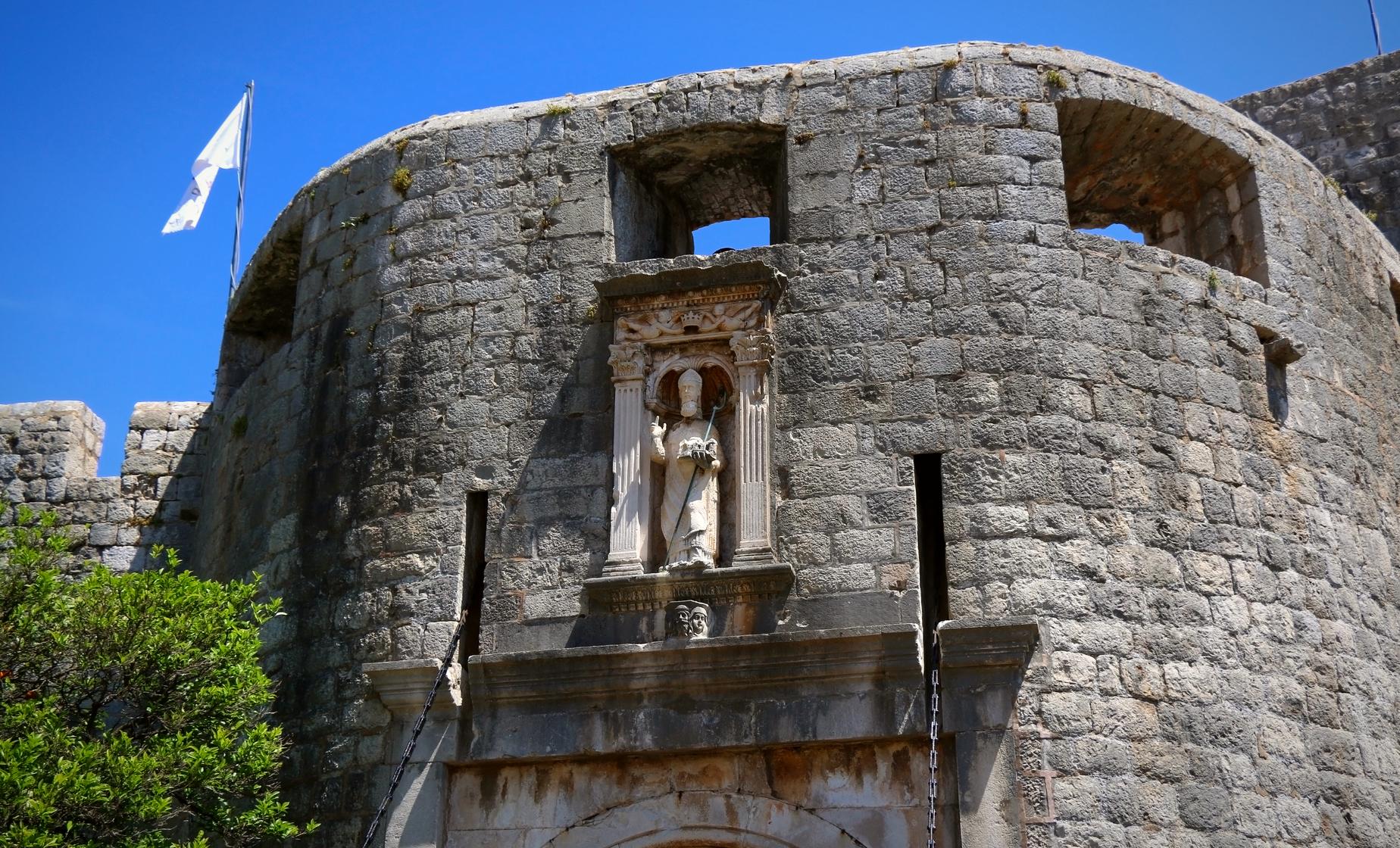
Your tour of the Old City begins at Pile Gate, the gated entrance to this ancient city. Cross the wooden drawbridge that was once pulled up each night in order to protect the city. Upon entrance into the walled city, see Onofrio's Fountain. During the Middle Ages, this fountain provided fresh water from the Dubrovnik River through an aqueduct system. Next on your walking tour of Old Town, see the imposing Baroque architectural features of The Franciscan Monastery. This monastery also features a garden, museum, and the famous Old Pharmacy. Still in operation after 700 years, The Old Pharmacy is one of the oldest working pharmacies in Europe, and visitors can peruse the jars, ointments, and poisons that date back to the 15th century.
Your walking tour of Dubrovnik's Old Town continues with a walk up and down both sides of the famous main street, the Stradun. A walk along the Stradun will show you a few of Dubrovnik's Renaissance buildings that survived the earthquake of 1667, and will give you an idea of the city's architectural heritage. Perhaps the finest Renaissance highlight is the Sponza Palace, which dates from the 16th century and is now home to the National Archives. The Rector's Palace is a Gothic-Renaissance structure from the 15th century when it was the seat of the Government and Rector of the Republic. It has finely-carved capitals and ornate decoration, which gives us a glimpse into how the ruling class lived. The St. Saviour Church is another glorious remnant of the Renaissance period.
After your guided tour, you may choose to continue sightseeing on your own on Stradun before making your way back to the ship. Stroll the quaint streets, shop in the many boutiques, enjoy refreshments at a local cafe, or simply sit on a bench and enjoy the sights before heading back to your ship.
Please Note: This tour concludes on the main street, Stradun. Guests must make their way back to the ship on their own.
Standard
Moderate
Cruise Ship PierThis exclusive introduction to Istanbul tour includes an orientation drive and two of the big three sites: The Blue Mosque and Hagia Sofia.
After meeting your professionally trained tour guide on the pier, you will begin an orientation drive through the business center of the modern city, across the Galata Bridge, along the banks of the Golden Horn and under the Byzantine Aqueduct of Valens. Along the way, you will see the Suleymaniye Mosque, dedicated to Sultan Suleyman the Magnificent. You will continue around the mighty city walls, which once protected Constantinople from the many invasions and attacks it incurred over the centuries.
In the Old City, your first visit will be to the Hagia Sophia Grand Mosque, formerly known as the Byzantine Church of Divine Wisdom. Originally built as an Orthodox basilica, it later was used as a mosque. Built in 537 on the orders of the Byzantine Emperor Justinian, it served as the cathedral of Constantinople and was the largest cathedral in the world for nearly a thousand years. Upon the conquering of Constantinople by the Ottomans in 1453, Hagia Sofia became a mosque and was used as such until 1931. It was opened as a museum in 1935 until 2020, when it became a mosque once again.
Departing Hagia Sophia, you will next visit the world-renowned Blue Mosque finished in 1616. Sultan Ahmet I commissioned the Blue Mosque when he was only 19 years old. The interior of the mosque is lined with more than 20,000 handmade ceramic tiles in more than fifty different tulip designs. The tiles at lower levels are traditional in design, while in the galleries they become flamboyant with representations of flowers, fruit and trees.
Next, visit the Hippodrome, originally the home of sports games in the Byzantine period. It is estimated that the Hippodrome of Constantine was about 1,476 feet long and 427 feet wide, and capable of holding 100,000 spectators. The track was U-shaped, and the emperor's box was located at the eastern end of the track.
You will be treated to an optional carpet demonstration with about 1 to 2 hours of shopping in the open (uncovered) section of the Grand Bazaar and the nearby covered area of the Grand Bazaar that dates to 1461. Well known for its jewelry, pottery, spice, and carpet shops, it also has areas where stalls are grouped by the type of goods sold, such as leather coats or gold jewelry. What started as one main building has grown into a sprawling complex consisting of 12 major buildings accessed through 22 doors. It is thought to have more than 5,000 shops and stalls, two mosques, two hamams, and many restaurants and cafes. Explore the shops filled with jewelry, carpets, leather ware, and copper goods. You will then be returned to the ship pier. Your time at the Bazaar is enough for an introduction. This is not a "shopping" tour. For the serious shopper wishing more time in the Bazaar, you can end your tour here. Please let your guide know you are not returning with the group. Guests remaining at the Bazaar are responsible for their own transportation back to the pier.
Please note: The Blue Mosque is closed from 30 minutes before until 30 minutes after prayer time, and 2 hours during Friday noon prayer. The covered area of the Grand Bazaar is closed on Sunday; a visit to the Spice Market will be substituted. The carpet demonstration is optional and guests not wanting to attend can use the time to stroll, shop or purchase refreshments.
Standard
Moderate
Cruise Ship PierMeet your professionally trained guide and drive to Ephesus, approximately 30 minutes from Kusadasi. Famous in antiquity for its Temple of Artemus during the years of the Roman Empire, the Greek port of Ephesus became the greatest city in Asia Minor. You will start your 90 minute Ephesus tour at the upper Magnesia Gate, and work your way down through the city, ending near the ancient Harbor.
Along the way, you will see the Forum, the Odeon, the Library of Celsus, Temple of Artemis, the Thermal Baths of Scolastika, and the Great Theater, built in the Greek era and reconstructed in the Roman period. With your skip-the-line access, you can fully enjoy these sites, which have played host to events as varied as Paul and his sermons to the Ephesians, to concerts by Sting, in part due to their remarkable acoustics.
You will walk along the Arcadian Way, where once Mark Antony and Cleopatra rode in procession. You will hear stories of Alexander the Great, the Virgin Mary, and many other famous visitors who walked the same marble streets that you are walking. As you depart the Ephesus site, you will be able to view the hilltop ruins of the Basilica of St. John in the distance, which was erected over his grave in the 6th century A.D. by Emperor Justinian.
Returning to the town of Kusadasi, guests will have the option to end their Ephesus tour in the shopping area, where they can attend a Turkish carpet explanation and explore the shops filled with jewelry, carpets, leatherware, and copper goods, or both. Turkish salespeople expect you to haggle and quite often you can get 10-15% off the listed price. Treat it as an adventure. The cruise pier is a 5-10 minute walk from the main shopping area.
Guests not wishing to attend the optional carpet shopping should stay on the bus and they will be taken directly back to the pier.